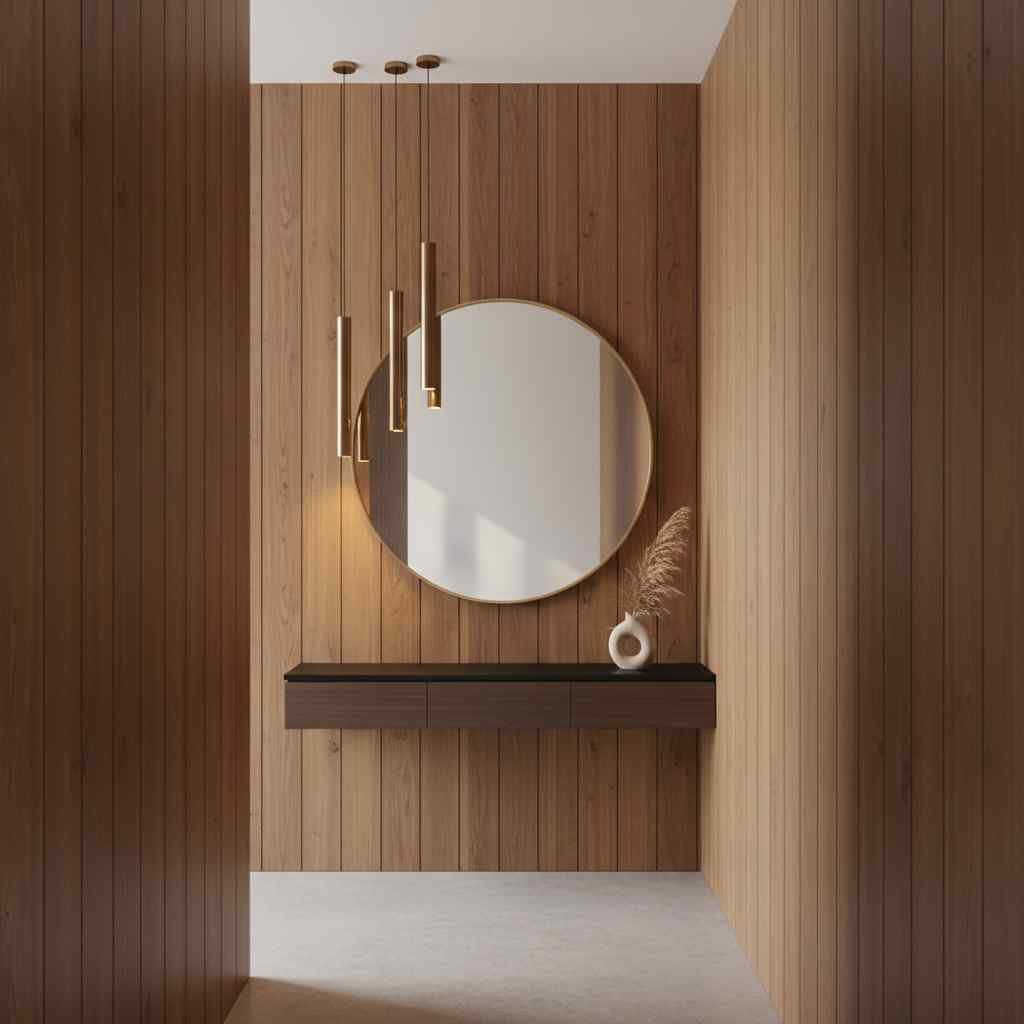
The entrance to your home is not simply a transitional space. It is the emotional handshake between your interior world and the outside. Yet too often, it becomes an afterthought — a narrow corridor with mismatched shoes, dim lighting, and blank walls.
The right hallway entrance ideas do more than decorate. They shape perception, increase functionality, and subtly elevate the entire home experience. Whether you’re working with a compact urban corridor or a generous foyer, thoughtful design choices can turn this overlooked zone into a statement.
Let’s explore how to transform your entryway into a space that feels intentional, welcoming, and distinctly yours.
Why Hallway Entrance Design Matters More Than You Think
When guests walk through the door, their impression forms in seconds. Designers often reference the psychological principle of “thin slicing,” a concept popularized by Blink, which explains how quickly humans make judgments based on limited information. Your hallway entrance sets the tone before a single conversation begins.
Beyond aesthetics, there is functionality. A well-designed entrance reduces clutter, supports daily routines, and improves traffic flow. In homes where square footage is precious, optimizing this space delivers disproportionate value.
The best hallway entrance ideas balance three elements seamlessly: visual impact, practical storage, and spatial harmony.
You can check out this article out from Ideal Home called: 4 things that people with an organised hallway always do – expert tips that guarantee a neat entrance way – which provides some alternative ideas.
Make a Statement With Architectural Details
Elevate With Wall Treatments
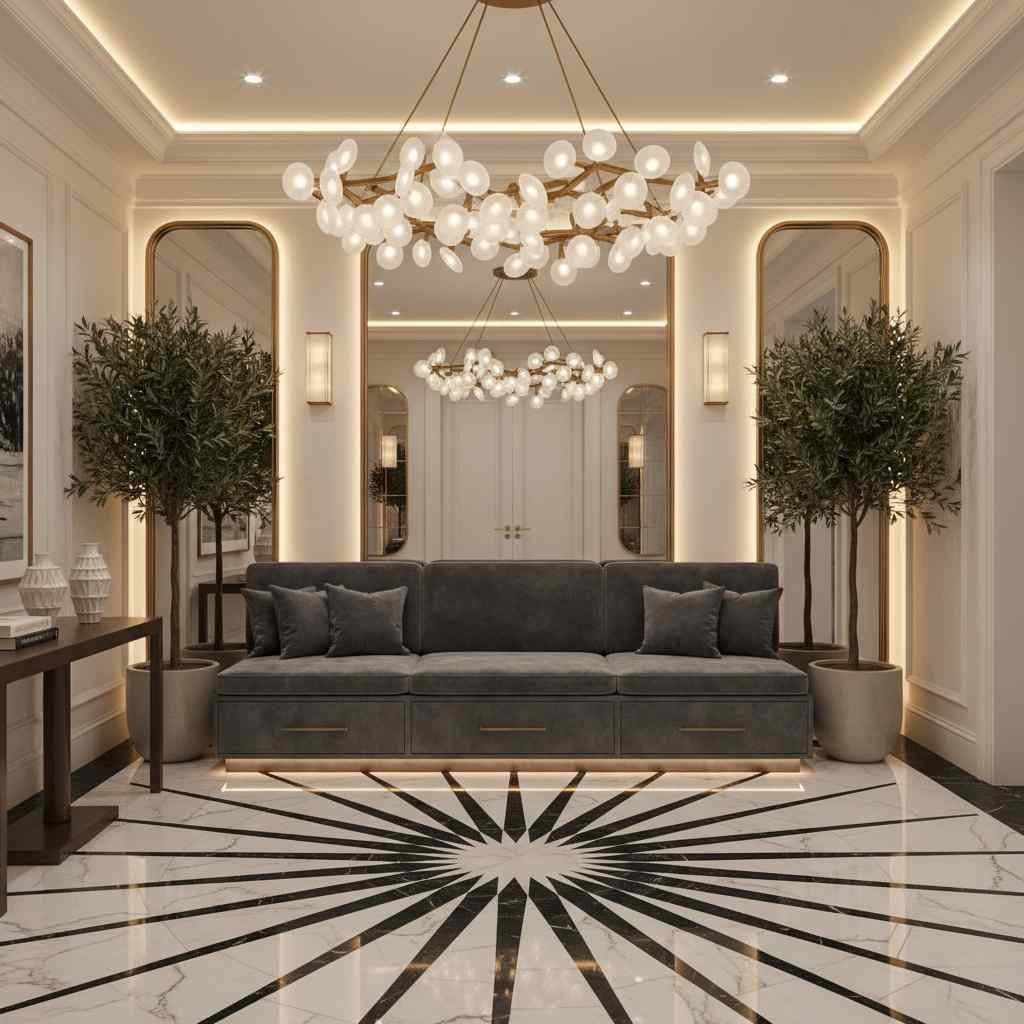
Plain white walls rarely maximize the potential of an entrance. Consider adding depth through wainscoting, slatted wood panels, or textured plaster finishes. These architectural layers introduce visual richness without consuming floor space.
For contemporary homes, subtle vertical paneling elongates narrow hallways. In more traditional interiors, detailed molding creates a sense of permanence and refinement.
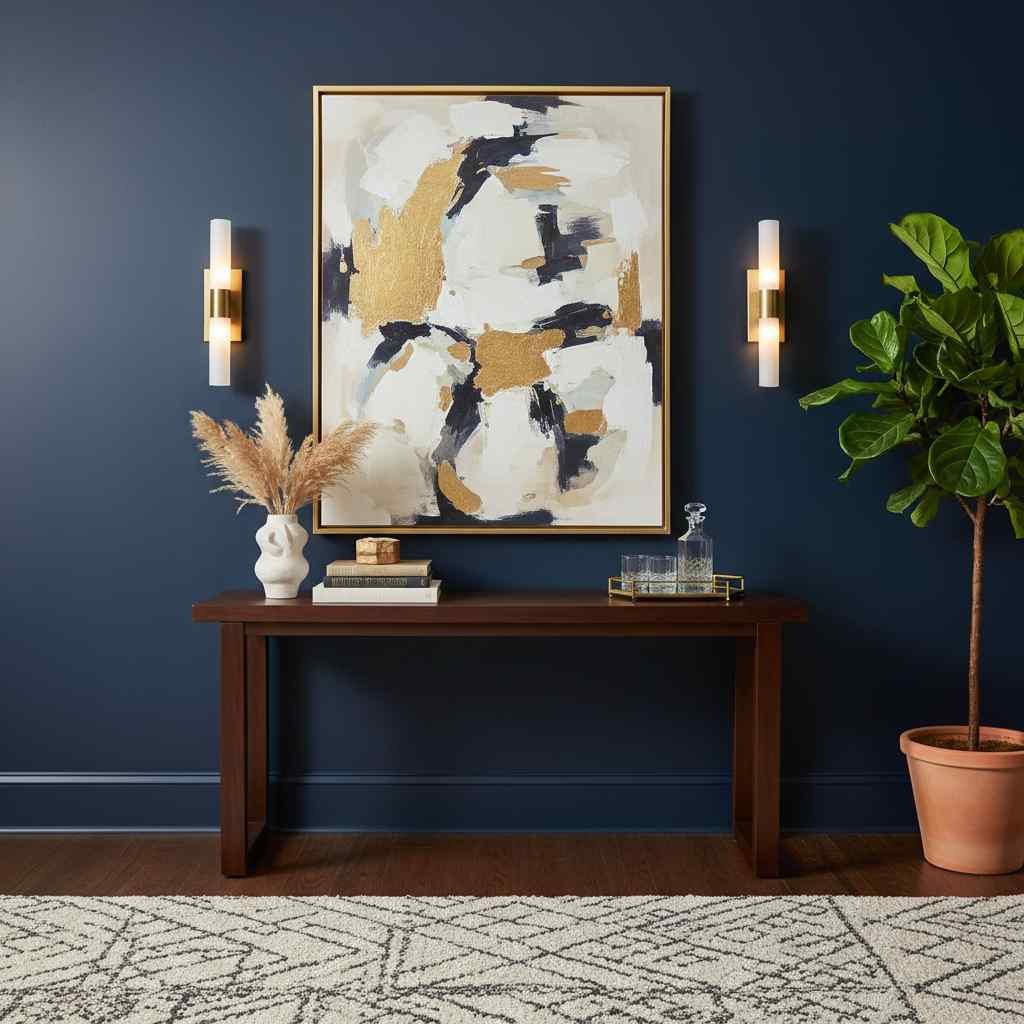
Paint also plays a decisive role. Darker tones like charcoal or deep navy can make a small hallway feel cocooned and dramatic, while soft neutrals amplify natural light. The key is intentional contrast with adjacent rooms.
Frame the Entry With a Defined Zone
If your hallway opens directly into a living area, use visual cues to create separation. A ceiling light feature, patterned tile underfoot, or an area rug signals that this space has its own identity.
Even in minimal homes, defining the entrance creates psychological order.
Smart Storage That Doesn’t Sacrifice Style
Clutter is the fastest way to undermine beautiful hallway entrance ideas. But storage must feel integrated rather than improvised.
Built-In Solutions for Seamless Design
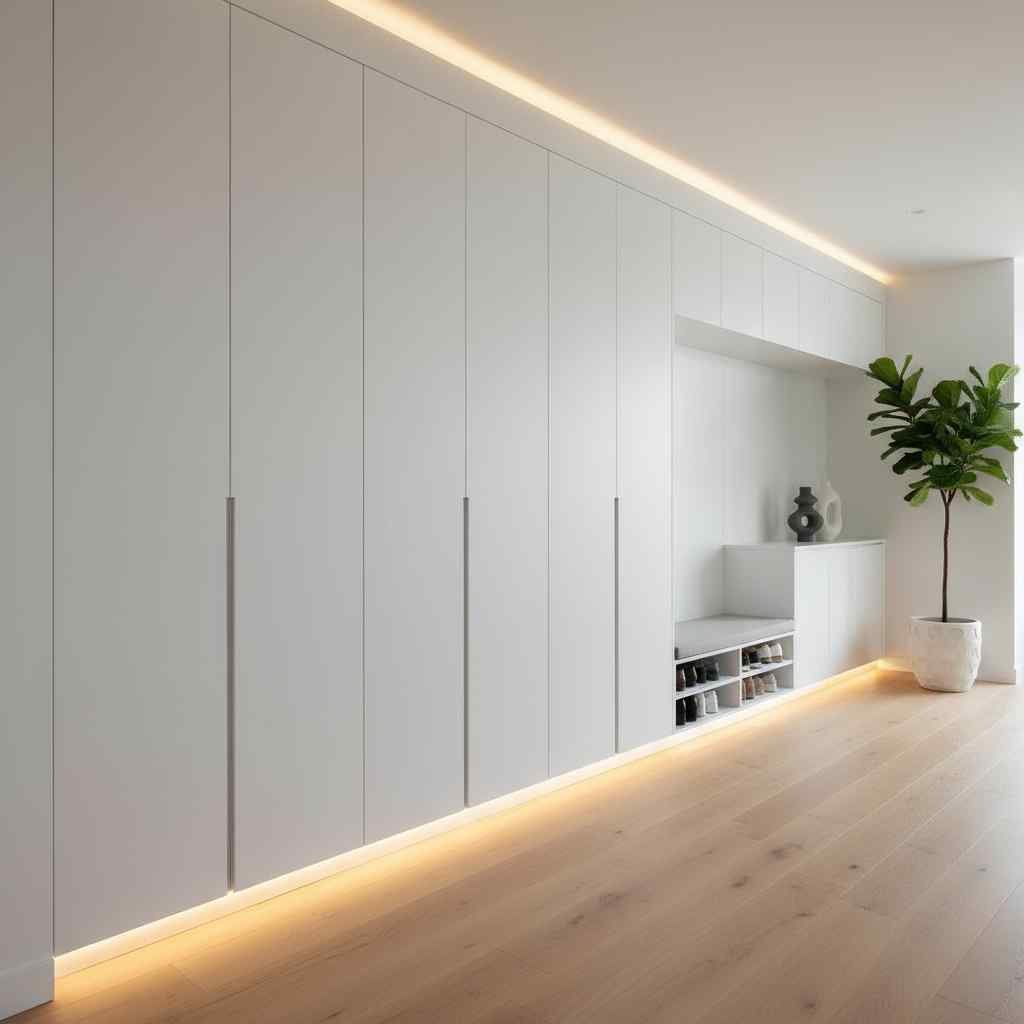
Custom cabinetry along one wall keeps coats, shoes, and bags concealed. If space allows, incorporating a shallow bench with hidden storage adds both utility and comfort. Built-ins are especially effective in narrow corridors where protruding furniture would obstruct movement.
Mirrored cabinet doors multiply light while disguising storage — a strategic move in smaller homes.
Minimal Furniture With Maximum Function
Where built-ins aren’t feasible, a slim console table creates a landing surface for keys and mail. Pair it with wall-mounted hooks or a floating shelf to keep the floor clear.
A thoughtful combination of form and function distinguishes elevated hallway entrance ideas from purely decorative ones.
Lighting That Transforms Atmosphere
Lighting in entryways is often utilitarian and uninspired. Yet this is one of the most powerful design tools available.
Layered Illumination for Depth
Overhead fixtures set the primary tone. A sculptural pendant or flush-mount fixture draws the eye upward, especially in high-ceilinged spaces. For drama and architectural character, many designers draw inspiration from iconic fixtures by brands such as Flos, known for blending art and illumination.
Layer this with wall sconces or table lamps on a console. Layered lighting creates warmth and dimension that a single ceiling light cannot achieve.
The Mirror-Light Combination
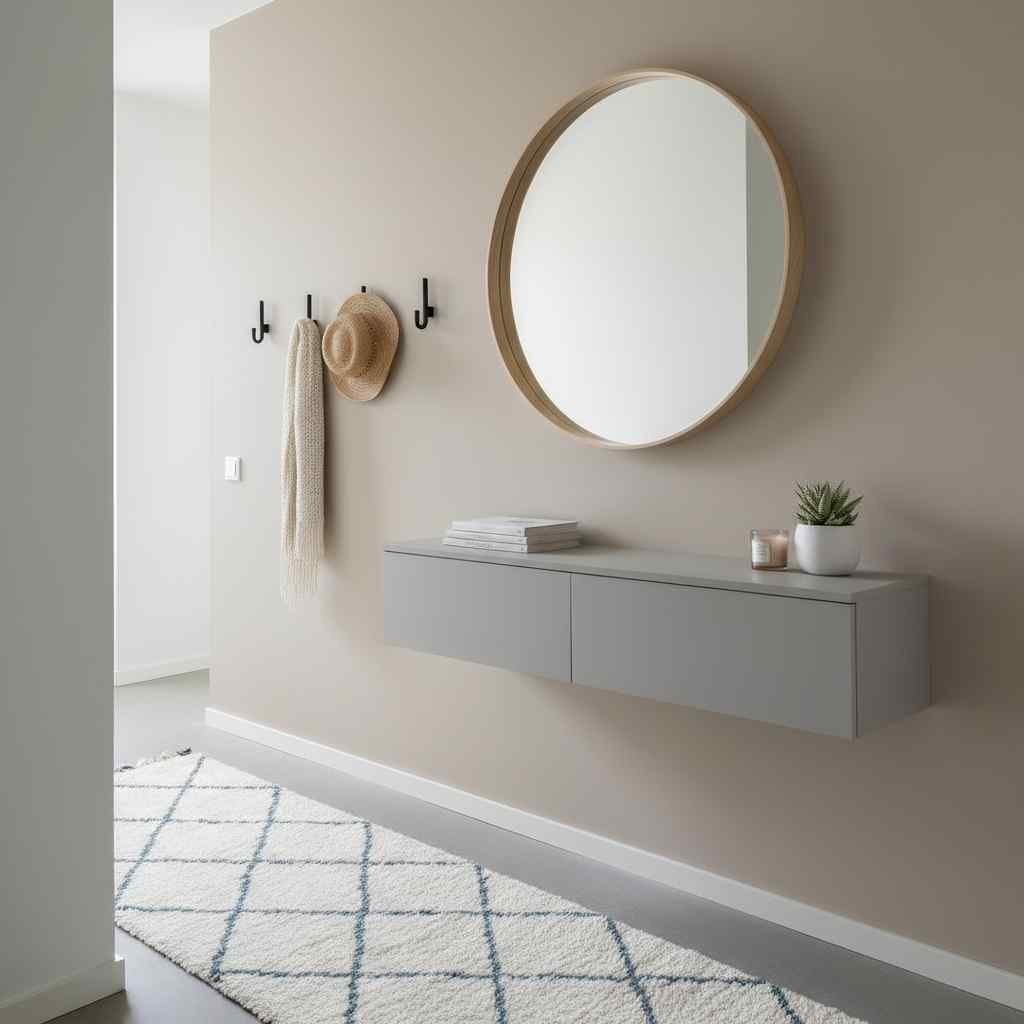
Placing a mirror opposite or adjacent to a light source doubles brightness and visually expands tight hallways. A round mirror softens linear corridors, while a tall rectangular mirror enhances verticality.
This simple combination remains one of the most effective hallway entrance ideas for small spaces.
Flooring That Anchors the Entrance
Flooring grounds the space and often takes the brunt of wear and tear. Choosing the right material balances durability with aesthetic appeal.
Patterned tiles create immediate personality and can evoke Mediterranean or vintage charm. Hardwood offers warmth and continuity if it runs throughout the home. For renters or budget-conscious upgrades, a durable runner rug introduces colour and softness without permanent alteration.
High-traffic areas benefit from layered mats — one outdoor, one indoor — to protect your flooring investment.
Art and Personal Touches That Tell a Story
An entrance should reflect identity. Carefully curated art or photography transforms a corridor from pass-through space into gallery moment.
Large-scale artwork makes a bold impression in wide hallways, while a structured gallery wall suits longer, narrow layouts. Black-and-white photography introduces sophistication, whereas colourful abstract art energizes neutral interiors.
If you gravitate toward mid-century modern aesthetics inspired by designers like Charles Eames, clean-lined frames and geometric compositions maintain cohesion.
Personal objects — a ceramic bowl from travels, a sculptural vase, a stack of design books — add authenticity. Avoid overcrowding. Editing is as important as selecting.
Small Hallway Entrance Ideas That Maximize Every Inch
Compact spaces demand strategic thinking. Fortunately, limitations often inspire the most creative solutions.
Wall-mounted shoe racks keep footwear organized without consuming depth. Vertical storage maximizes height instead of width. Light-coloured walls combined with reflective surfaces prevent visual compression.
A narrow floating shelf beneath a mirror provides just enough surface area without impeding flow. Even a subtle change in paint colour within a tight corridor can create a boutique-hotel feel.
When designing smaller entryways, restraint becomes a virtue.
Creating Cohesion With the Rest of the Home
The entrance should feel like a preview, not an interruption. Repeating materials or colour accents from adjacent rooms builds visual continuity.
If your living room features brass accents, echo that through entryway hardware or lighting. If natural wood tones dominate elsewhere, introduce a wood bench or console.
Consistency reinforces intention, making your hallway entrance ideas feel thoughtfully integrated rather than isolated experiments.
Seasonal Styling Without Permanent Overhaul
One overlooked opportunity lies in subtle seasonal refreshes. Switching artwork, adding a textured throw on a bench, or introducing fresh greenery keeps the space dynamic.
In colder months, layered textiles and warm lighting create comfort. During spring and summer, lighter fabrics and fresh florals bring airiness.
Small, rotating changes keep your entryway engaging without requiring structural renovations.
Avoiding Common Entryway Design Mistakes
Overfilling the space is the most frequent misstep. Every object in a hallway entrance should serve a purpose — aesthetic, practical, or emotional.
Another error is neglecting lighting temperature. Cool white bulbs often feel sterile in entryways. Opt for warm tones that flatter skin and materials alike.
Finally, resist the urge to match everything perfectly. Subtle variation in texture and finish creates depth and interest.
Bringing It All Together
The most effective hallway entrance ideas do not rely on a single dramatic feature. They layer thoughtful choices — lighting, storage, colour, texture, and personal detail — into a cohesive whole.
When executed well, your entrance becomes more than a passage. It becomes a pause. A breath between outside and in. A subtle declaration of your home’s personality.
Designing this space with intention transforms daily routines. You feel it each time you step inside. Guests sense it instantly.
And that is the power of a well-crafted first impression.
Form the Hallway to the Dining Room, check out our article on Modern Dining Room Table Ideas That Turn Every Meal Into an Experience.